Desk Terrarium in a Windowless Office: LED Grow Light Guide
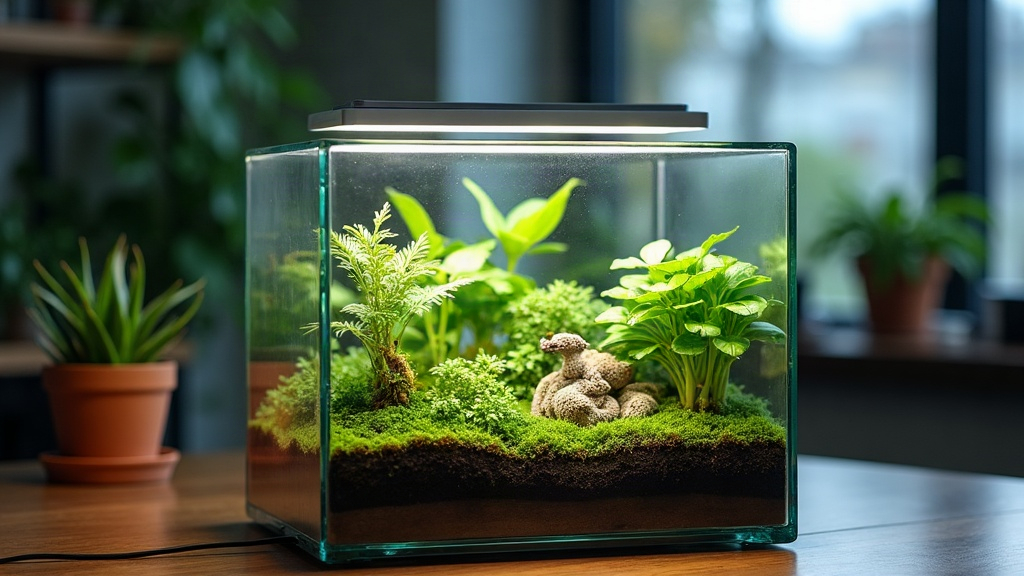
A desk terrarium can absolutely thrive in a windowless office, but only if you swap natural daylight for the right LED grow light, set it at the correct distance, and keep it running on a schedule you actually stick to. Here’s exactly how to set one up and keep it alive, step by step, so your little ecosystem ends up lush instead of leggy, pale, or moldy.
Why Windowless Offices Are Trickier Than They Seem
Fluorescent office lighting looks plenty bright to your eyes, but plants read light completely differently. Those standard ceiling fixtures pump out mostly green-yellow wavelengths and deliver nowhere near enough usable photons (measured in PAR/PPFD) for real photosynthesis. Skip a dedicated grow light and your terrarium plants will quietly stretch, fade, and eventually die, no matter how “sunny” the glass looks to you.
Step 1: Choose the Right LED Grow Light
- Full-spectrum LED (5000K–6500K, white light) is the best pick for a desk. It blends in naturally in an office setting while still covering the red and blue wavelengths plants actually need.
- Small clip-on or gooseneck grow lights (6-12W) work well for single terrariums roughly 8-14 inches wide.
- Aim for a fixture rated 150-300 PPFD at the canopy if you’re growing moss, ferns, or fittonia. Low-light terrariums with pothos or peperomia can get by on 100-150 PPFD.
- Skip the cheap purple “blurple” LEDs. They’re energy-efficient, sure, but nobody wants to sit next to one for eight hours a day.
Step 2: Position the Light Correctly
Mount the LED 6-10 inches above the terrarium opening, angled slightly so you don’t create hot spots on the glass. Too close and you risk scorched leaves or an overheated enclosure; too far and intensity drops off fast, since light falls off with the square of the distance, not in a straight line.
If your terrarium is closed (a sealed little ecosystem), condensation on the glass will diffuse the light somewhat. Compensate by nudging the fixture a bit closer, or just go with a higher-output light from the start.
Step 3: Set a Consistent Light Schedule
Grab a cheap outlet timer or smart plug. This one habit matters more than almost anything else for a windowless terrarium.
- 12-14 hours on, 10-12 hours off mimics a healthy day/night rhythm.
- Keep the same schedule every single day, weekends included, so photosynthesis stays steady even when nobody’s in the office to flip a switch.
- Working a standard 9-to-5? Set the timer to come on an hour before you arrive and switch off a few hours after you leave. Don’t trust yourself to remember manual on/off, you won’t.
Step 4: Pick Plants Suited to Low-Intensity LED Setups
Not every terrarium plant is cut out for a small desk LED. Some reliable options:
- Mosses (sheet moss, cushion moss): tough, forgiving, handle lower light without complaint
- Fittonia (nerve plant): thrives on humidity plus moderate LED exposure
- Pilea depressa or Pilea glauca: compact and easygoing
- Small ferns (button fern, maidenhair in closed setups)
- Peperomia varieties: fine with slightly dimmer conditions if needed
Steer clear of succulents and cacti in closed, humid terrariums. They want dry air and strong direct light, something a desk LED just isn’t built to deliver.
Step 5: Manage Humidity and Condensation
Windowless offices usually run on stable, dry HVAC air, which actually works in your favor against mold. Even so:
- Open-top terrariums need a light misting 2-3 times a week, depending on what’s growing inside.
- Closed terrariums will fog up heavily most mornings. Crack the lid for an hour to vent the excess moisture before it turns into rot.
- Don’t forget the LED itself puts off heat. It can dry out an open terrarium faster than you’d expect from natural daylight alone.
Step 6: Watch for Warning Signs
- Leggy, stretched growth → light’s too far away or too weak. Move it closer or bump up the wattage.
- Bleached or crispy leaf tips → light’s too close or too intense. Raise it, or cut back the daily hours.
- Fog that never clears → too much moisture, not enough airflow. Vent more often.
- Yellowing lower leaves → usually overwatering, not a lighting problem. Check the soil before you touch the light setup.
Maintenance Routine (Weekly Checklist)
- Confirm the timer’s still firing on schedule.
- Wipe dust off the LED lens. A dusty lens quietly loses output over a few weeks and you won’t notice until growth stalls.
- Check for mold, trim any dead leaves, and give the terrarium a quarter turn if one side isn’t getting even light.
- Top off moisture when the substrate feels dry (open terrariums only).
Conclusion
A windowless office is no excuse anymore for skipping a thriving desk terrarium. The right full-spectrum LED, set at the correct distance, running on a strict 12-14 hour timer, can stand in for a sunny window just fine. Pair that with humidity-loving plants like moss, fittonia, or a small fern, and your terrarium will stay green and alive year-round, no matter how little daylight actually reaches your desk.