Do You Really Need Activated Charcoal for Terrariums?
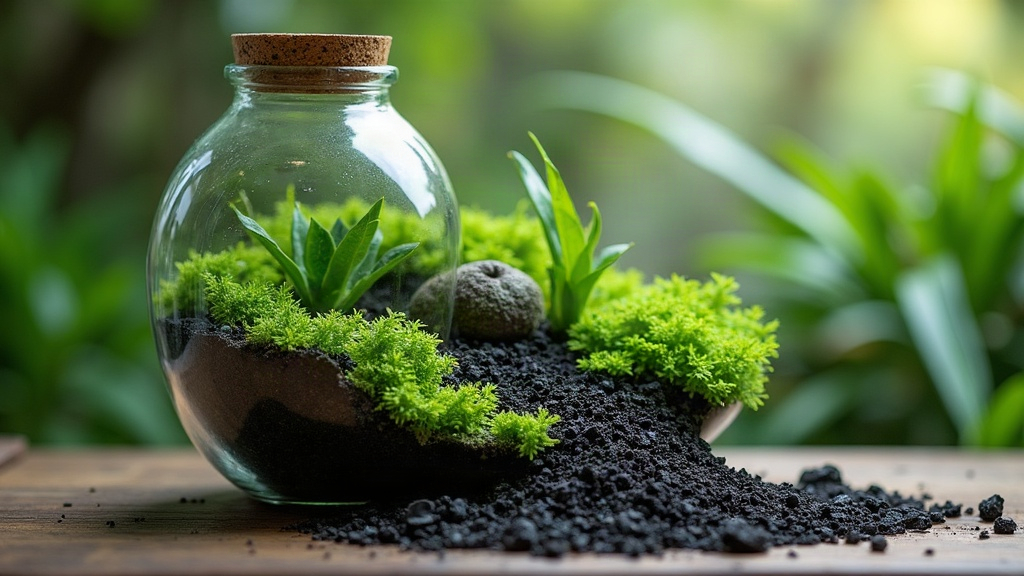
If you’ve spent any time researching how to build a terrarium, you’ve probably hit a dozen guides telling you activated charcoal is non-negotiable. A “must-have” layer, they call it. Is it, though? Not really. Activated charcoal is genuinely useful for odor control and keeping water fresh inside closed terrariums, but it’s not something every build requires. Open terrariums, short-term projects, or anyone watching their budget can often skip it entirely. Let’s get into what charcoal actually does, when it earns its place in your setup, and which cheaper alternatives do the same job.
What Does Activated Charcoal Actually Do?
Activated charcoal is porous carbon that’s been processed to dramatically increase its surface area, which lets it absorb toxins, odors, and excess moisture. Inside a terrarium, it’s doing three main things:
- Filtering water as it moves through the soil, cutting down the odds of mold or bacterial buildup
- Neutralizing odors from decomposing organic matter sitting in a closed, humid environment
- Slowing mold growth in enclosed containers where airflow is basically nonexistent
See the pattern? Every one of those benefits matters most in closed terrariums, the glass jars and lidded containers that trap moisture and cut off air exchange. In that kind of sealed little ecosystem, stagnant water and trapped humidity can turn sour fast, and mold isn’t far behind. That’s exactly where charcoal earns its keep.
When You Can Skip It
For a lot of beginner setups, activated charcoal just isn’t doing much:
- Open terrariums with decent airflow almost never develop the odor or mold problems charcoal is designed to prevent.
- Short-term or decorative terrariums (a succulent arrangement you’ll swap out every few months, say) don’t sit around long enough to build up the organic matter that causes trouble.
- Terrariums with a solid drainage layer already keep standing water in check, and standing water is the real root cause behind most odor and mold issues anyway.
If your terrarium is open-air, drains well, and isn’t crammed with moisture-hungry plants, you could leave the charcoal out and probably never notice.
Affordable Alternatives to Activated Charcoal
Want some of charcoal’s upside without buying a dedicated bag of the stuff? Try one of these instead.
1. Crushed Lava Rock
Lava rock has a similar porous structure, so it helps with drainage and offers a bit of filtration on the side. Per volume, it’s often cheaper than specialty “aquarium charcoal,” and it doubles as your drainage layer, so you’re not paying for two separate materials.
2. Horticultural Sand or Fine Gravel
It won’t touch odors, true, but sand dramatically improves drainage, and poor drainage is the underlying problem charcoal is trying to patch over in the first place. Fix the moisture issue and the odor issue tends to fix itself.
3. Aquarium Charcoal from Pet Stores
Still want charcoal, specifically? Skip the “terrarium kit” with its inflated price tag and grab aquarium-grade activated carbon from your local pet store instead. It’s the identical material, just without the markup.
4. Just Improve Your Drainage Layer
A thicker base layer, pebbles, broken pottery shards, even packing peanuts (seriously, people use these) gives excess water somewhere to collect away from the roots. No soggy soil, no swampy smell, no need for charcoal to mop up after the fact.
5. More Frequent Light Maintenance
For small or open terrariums, pulling out dead leaves once a week and cracking the lid for an hour now and then does more to keep things fresh than a layer of charcoal ever will on its own.
A Simple Rule of Thumb
- Closed, humid terrarium with live plants? Charcoal genuinely helps here, but go thin. Half an inch is plenty.
- Open terrarium, or a succulent/cactus arrangement? Skip it. Put that money toward better drainage material or soil instead.
- Tight budget? Drainage layer first, always. Charcoal is a nice-to-have, not a foundation.
Common Beginner Questions
Will my terrarium mold without charcoal? Not necessarily. Mold shows up because of excess moisture and poor airflow, two things you control directly through your drainage layer, how much you water, and whether you ever let the container breathe.
Can I use regular charcoal briquettes instead? No. Regular charcoal, especially briquettes loaded with additives, can leach chemicals that are bad news for plants. Stick to activated charcoal labeled specifically for aquarium or horticultural use.
Is charcoal necessary for a terrarium with no plants, just decor? No. A purely decorative terrarium with no soil or organic matter has nothing to decompose in it, so charcoal has nothing to do.
Conclusion
Activated charcoal is a useful tool, not a rule carved in stone. If you’re building an open terrarium, a simple succulent display, or just working with a tight budget, skip the charcoal and put your money into better drainage, smarter plant choices, and a bit of regular upkeep instead. Save it for closed, moisture-heavy terrariums, where its odor- and mold-fighting properties actually earn their keep, and when you do buy it, grab the aquarium-grade stuff so you’re not paying extra for a label that says “terrarium kit.”