Curing White Mold on Terrarium Driftwood Without Harming Springtails
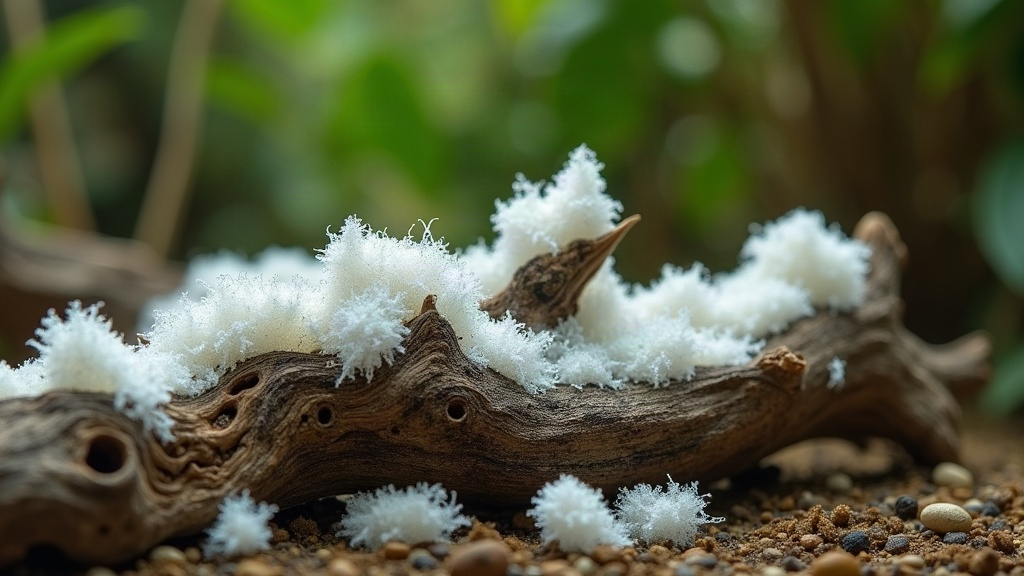
That first fuzzy white bloom crawling across your driftwood can feel like a five-alarm emergency. Your gut says grab a spray bottle and scrub, but in a bioactive setup, that instinct will wreck the whole tank. Curing white mold on terrarium driftwood without harming springtails really just comes down to patience, a few environmental tweaks, and letting the ecosystem do what it’s built to do. Below, I’ll walk through why this mold shows up in the first place and the safest ways to deal with it while your clean-up crew stays happy and fed.
Why Is There White Mold on My Terrarium Driftwood?
It helps to know what’s actually going on before you touch anything. When fresh driftwood, spider wood, mopani, ghost wood, whatever you picked up, gets dropped into a warm, humid enclosure, the sugars and starches locked inside start breaking down almost immediately.
That breakdown is basically an open buffet for fungal spores that are already floating around in the air or hiding in your substrate. This kind of bloom pops up constantly in freshly set-up tanks. Terrarium folks usually call it “new tank syndrome,” or just the bioactive cycling phase. The wood is dumping out nutrients it doesn’t need anymore, and the mold is simply the first thing to show up and eat.
Will the Mold Harm My Springtails?
Nope. Not even close. If anything, white mold is basically springtail food. Isopods love it too. Your microfauna will swarm that patch of fuzz like it’s a buffet line.
The catch comes when the mold gets out of control, thick enough to blanket a moss patch or smother a small seedling. And a runaway outbreak usually isn’t random. It’s often a sign that something else is off. Stagnant air pockets, a substrate that’s holding way too much water, that sort of thing. Left unchecked long enough, those underlying issues can eventually stress out your springtails and your display animals too.
Safe Methods to Eliminate the Mold
If the mold has crossed the line from “normal cycling” to “actual eyesore” or is smothering your plants, it’s fine to step in. Here’s how to do it without nuking your bioactive setup in the process.
1. Let the Clean-Up Crew Work
Honestly, the best fix is often to just wait it out. A healthy springtail colony is already chewing through that mold as you read this. Want to speed things up? Drop a fresh culture straight onto the affected patch of wood. Given that much food, they’ll reproduce fast, sometimes noticeably faster within a week, and clear the mold out completely.
2. Increase Ventilation and Airflow
Fungus loves dead, stagnant, soggy air. Springtails, on the other hand, want moist substrate but handle a little fresh air just fine.
- Open the vents: Got adjustable vents on your enclosure? Crack them open.
- Add a micro-fan: A small USB or computer fan aimed at the mesh lid for a couple hours a day keeps air circulating and makes it a lot harder for spores to settle in and take hold.
- Reduce misting: Ease off your spray schedule for a bit. Letting the top of the wood dry out slightly starves the mold, while the substrate underneath stays plenty damp for your springtails.
3. Manual Spot Cleaning
For thick, ugly mold patches, just wipe it off by hand. A soft toothbrush or a damp Q-tip works fine. Skip any cleaning products entirely. Brush the mold loose and let it drop into the substrate below. Your isopods and springtails will happily finish off whatever’s left.
4. The Boil and Bake Method (Extreme Cases)
If mold keeps coming back week after week no matter what you try, and the wood can be pulled out easily, it might be time to sterilize it outside the tank.
- Take the driftwood out (give it a shake first to knock any springtails loose).
- Boil it for 30 to 45 minutes in a large pot to leach out remaining sugars.
- Bake it at 200°F (93°C) until it’s bone dry.
- Let it cool all the way down before putting it back in.
What to Avoid: Dangerous “Cures”
Whatever you do, stay away from standard household cleaning tricks. Never use any of these inside a bioactive terrarium:
- Bleach solutions: Even diluted way down, bleach kills springtails and your beneficial soil bacteria on contact.
- Vinegar: It’s a “natural” cleaner, sure, but the acidity throws off your substrate’s pH and is lethal to microfauna.
- Hydrogen Peroxide: People recommend it for houseplant mold all the time, but it’ll wipe out your springtail colony just as fast as it kills fungus.
- Commercial Fungicides: Straight-up poison for the ecosystem you’ve spent weeks building.
Conclusion
A sudden mold bloom looks scary, but curing white mold on terrarium driftwood without harming springtails is mostly about sitting on your hands and trusting the process. A bioactive tank is a living system working toward balance, not a display piece that needs constant intervention. Boost your springtail numbers, adjust the airflow, keep the chemicals far away, and you’ll get through this awkward phase into a tank that looks (and functions) exactly the way it should.